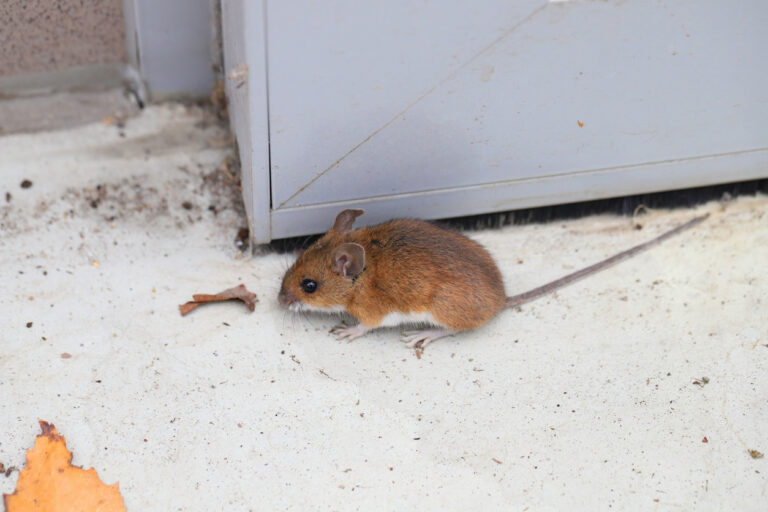
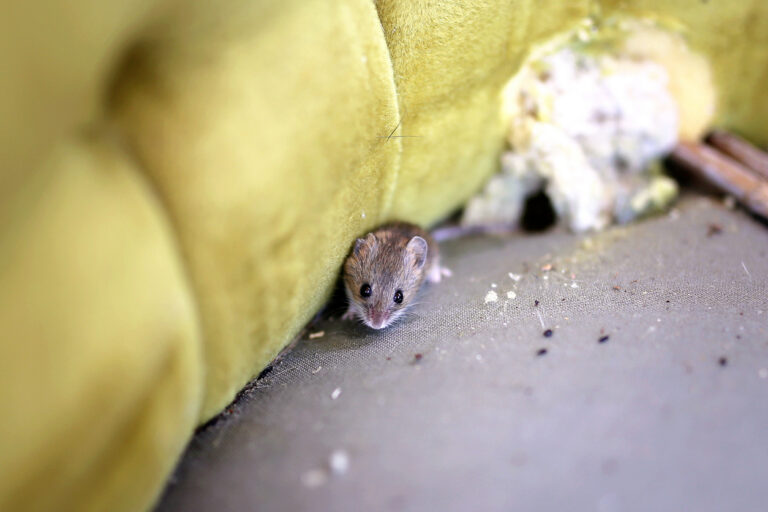
You do not have to see a mouse run across the kitchen to have mice in your home. In many infestations, the mice themselves stay remarkably well hidden. They move through wall voids, cabinets, attics, basements and other protected spaces, often becoming most active after the house gets quiet. Homeowners usually notice the evidence they leave behind first. A few droppings beneath the sink. Scratching somewhere behind the bedroom wall. A cereal box with a chewed-open corner. An unfamiliar musky smell in the basement.
One clue may be easy to dismiss. But when several start appearing together, mice have likely found more than a temporary way into your home. To help, the following outlines the signs to watch for and what to do when they start adding up.
Mouse Droppings Are Often the First Obvious Sign
Finding small, dark pellets is one of the clearest indications that mice have been moving through an area. Mouse droppings are typically about 1/4 inch long, narrow and somewhat similar in shape to a grain of rice. Fresh droppings tend to be darker and may appear slightly shiny, while older waste dries out and becomes duller. Look closely in areas where mice can find food, water or cover, including:
- Kitchen cabinets and pantry shelves
- Under sinks
- Behind the refrigerator or stove
- Along baseboards
- Basements and garages
- Attics
- Closets and storage areas
- Near pet food
- Around boxes or stored belongings
A single old dropping does not tell you much about the size of a mouse population. What matters is whether new droppings keep appearing. If you clean an area safely and find fresh pellets there again, mice are still using that space.
Listen for What You Cannot See
Sometimes the first sign of mice is not visual at all. Mice often become more active after dusk, once people and pets settle down and the house becomes quieter. That is why homeowners frequently report scratching, rustling or quick scurrying sounds after they go to bed and often hear activity in the following places:
- Inside walls
- Across ceilings
- In an attic
- Behind kitchen cabinets
- Beneath floors
- Around insulation
- In a basement or crawl space
Mouse movement is usually lighter than the heavier footsteps associated with squirrels or other larger animals. Repeated scratching or movement in the same area, especially at roughly the same time each night, deserves a closer look. While mice are nocturnal, they may also come out during the day.
Pay Attention to Chewed Food and Gnaw Marks
Mice rarely move into a house without eventually finding something to eat. A pantry, pet-food bowl or bag of birdseed can become an easy food source. You may notice small holes in packaging, chewed corners on cardboard boxes or food that appears to have been disturbed. But mice do not only chew when they are hungry. Rodents gnaw regularly, which means you may also find damage to wood, plastic, insulation and even electrical wiring.
Fresh gnaw marks are especially useful because they indicate recent activity rather than evidence left from a mouse problem months ago.
A Musky or Ammonia-Like Smell Can Point to Hidden Activity
If you cannot see mice, your nose may tell you where they have been. Mouse urine has a distinct musky odor that can become sharp or ammonia-like as waste accumulates. The smell is often strongest in enclosed areas such as cabinets, closets, attics, basements or wall voids and the odor can sometimes become noticeable before homeowners find more obvious physical evidence.
If the smell returns shortly after an area has been cleaned, that can indicate mice are still traveling or nesting nearby.
Look for Nesting Material in Quiet Areas
Mice look for protected places where they can build nests without much disturbance. Paper, cardboard, fabric and insulation are all materials they can shred and carry into a nesting area. A strange collection of torn material behind stored boxes, inside a cabinet or tucked into insulation may therefore be more than household clutter. Garages, basements, attics and storage rooms are particularly worth inspecting because they offer both cover and materials that can sit undisturbed for long periods.
Finding nesting material becomes more meaningful when it appears alongside droppings, urine odor or nearby gnawing and certainly indicates red flag warning signs of a mouse infestation.
Grease Marks and Mouse Travel Routes Can Be Easy to Miss
Mice often use the same routes repeatedly. Rather than crossing large open areas, they frequently travel close to walls, baseboards, cabinets and other edges that provide some protection. Over time, repeated contact can leave dirty or greasy smudge marks along these pathways. These marks are subtle, which means homeowners may overlook them unless they are already investigating another sign of activity, so it is important to pay particular attention around:
- Holes near plumbing
- Utility penetrations
- Gaps behind appliances
- Corners of cabinets
- Foundation openings
- Garage walls
- Basement utility areas
Seeing the same kind of activity around one opening can help narrow down where mice are traveling.
Seeing a Mouse During the Day Is Important
A mouse sighting is the most obvious sign, but the timing can tell you something too. Mice are generally more active at night, but they aren’t limited to nighttime. A mouse may come out during the day if food is limited, its nest has been disturbed or competition within the population has increased. Seeing one mouse during daylight doesn’t automatically mean you have a severe infestation.
However, repeated daytime sightings are more concerning, particularly when you are also finding droppings, hearing noises or seeing fresh damage. Increased competition for food and protected travel routes can push mice to be active outside their preferred hours.
Several Warning Signs Tell a Bigger Mouse Infestation Story
There is no simple formula such as “five droppings equals two mice.” Mouse infestations do not work that way. What matters is the pattern of evidence throughout the home. A few old droppings in an unused garage are different from fresh droppings appearing every morning beneath the kitchen sink. One unexplained noise is different from scratching every night, plus gnawed food packages and the smell of urine. The possibility of an active infestation becomes much stronger when you find:
- Fresh droppings after previous waste has been cleaned
- Evidence in several rooms
- Repeated scratching or movement
- New gnaw marks
- Damaged food packaging
- Nesting material
- Persistent urine odors
- Multiple mouse sightings
- Daytime activity
The key is not waiting for every sign on the list before taking the problem seriously.
Why Mouse Problems Often Become More Noticeable in the Fall
Mice can cause problems throughout the year, but indoor activity often becomes much more noticeable as temperatures drop. Mice are attracted to homes for warmth, shelter, food and water, which are harder to find outside during the fall and winter. Small openings around foundations, doors, siding, vents and utility lines can provide entry points. Once mice are established indoors, they do not simply disappear when winter arrives. They can continue feeding, nesting and reproducing inside the structure.
That is one reason early fall is a useful time to inspect areas that tend to get overlooked during warmer months, particularly basements, garages, attics and storage spaces.
What to Do If You Find Signs of Mice
Finding mouse activity doesn’t mean you need to panic, but it does mean you should investigate instead of simply cleaning up the evidence and forgetting about it. Finding signs of mouse activity means starting with the basics to help get rid of them.
Remove Easy Food Sources
Store pantry items and pet food in sealed containers. Clean crumbs from counters, floors and beneath appliances. Avoid leaving pet food out overnight as well. Mice do not need much food to keep returning to a reliable feeding area.
Check for Entry Points
Inspect around pipes, utility lines, foundation gaps, vents, doors and other exterior openings. Remember that what looks too small for a mouse may not necessarily be too small.
Clean Rodent Waste Carefully
Do not sweep or vacuum dry mouse urine or droppings. The CDC recommends wetting contaminated rodent waste with disinfectant before cleanup rather than disturbing dry material and potentially putting contaminated particles into the air.
Monitor for New Activity
After cleaning an area, keep checking it. Fresh droppings, new chewing or recurring odors tell you much more about current activity than old evidence that may have been sitting unnoticed for months.
Use Traps Carefully
Traps can help with limited mouse activity, but catching one mouse doesn’t necessarily answer two important questions about the underlying issue. How did it get inside? And are there more? If signs continue after trapping, the problem is probably no longer just about catching the mouse you can see.
When Is It Time to Call a Mice Exterminator?
At some point, a mouse problem becomes difficult to diagnose and solve from visible evidence alone. Professional help makes sense when droppings keep returning, mice are active in several parts of the house, scratching continues inside walls or ceilings, you are seeing mice regularly, traps are not reducing the activity or you cannot determine how they are getting inside.
If the clues around your home are starting to add up, do not wait until seeing a mouse becomes an everyday occurrence. Identifying the source early makes it easier to address the infestation before mice have more time to spread through the property.
A comprehensive inspection by a professional goes far beyond simply spotting a mouse in the house. The primary focus is pin-pointing travel routes and nest locations, identifying points of entry, targeting the current infestation, and minimizing the environmental factors that encourage new mice to enter. Eliminate ’Em offers expert mice exterminator services and pest management throughout Connecticut and Rhode Island, as well as across neighborhoods in Western Massachusetts and Southern New York.
Implementing proactive prevention strategies provides the most effective approach to eliminating factors that attract mice and other rodents to your residence. To resolve an active rodent problem, rely on the specialists at Eliminate ‘Em. Our mice and rodent control technicians will resolve your current infestation and put preventive solutions in place to protect your home going forward. For prompt mouse removal or additional pest control assistance, contact us today.